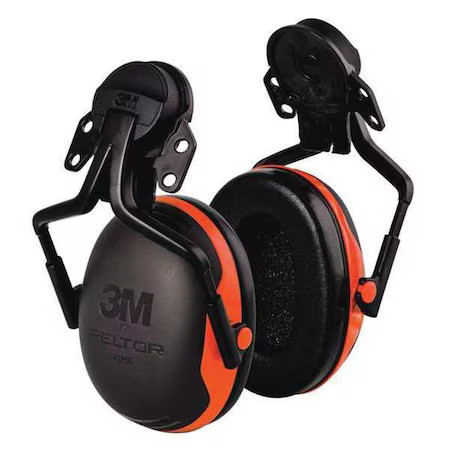
3M X5A Construction Gun Range Sport Shooting EAR MUFFS Noise Reduction
NRR 31USD $48.95
Condition : New
Free Shipping

Notify me when the price drops
We will email you if we find a lower price on this product!
- 31 dB Noise Reduction Rating (NRR)
- Earcup pivot points tilt for optimum comfort and efficiency
- Specially-formulated foam in the earcups
- Replaceable ear cushions and foam liners (hygiene kit HYX5)
- CSA Class AL
3M™ PELTOR™ X5 Earmuffs are designed for very high noise situations, offering a Noise Reduction Rating (NRR) of 31 dB for both headband and hard hat-attached models. The high attenuation provided by these earmuffs is a result of the combination of specially-formulated foam in the earcups and cushions and the innovative spacer and cup design.
3M™ PELTOR™ X-Series Earmuffs deliver comfort, design, and protection in one groundbreaking earmuff line. Additionally, these earmuffs have earcup pivot points that tilt for optimum comfort and efficiency, as well as replaceable ear cushions and foam liners to help ensure proper equipment hygiene.
Designed for comfort and excellent noise reductionThe 3M™ PELTOR™ X Series Earmuffs are designed for comfort and excellent noise reduction during tough jobs where loud sounds are frequent. Available in Over-the-Head, Hard Hat Attached and Behind-the-Head models, they are designed to adapt the requirements of the work. Featuring an adjustable cup that angles to help create a customized fit for the worker. Electrically insulated options available.
Compatible with the 3M™ E-A-Rfit™ Dual-Ear Validation System
E-A-Rfit™ provides an accurate quantitative assessment of how much noise reduction a hearing protector provides to an individual worker.
Recommended industriesAirportsConstructionManufacturingFood, Beverage & AgricultureOil & GasHeavy manufacturingPharmaceutical TransportationX marks the spot for comfortable hearing protection*U.S. EPA specifies the NRR as the measure of hearing protector noise reduction. However, 3M makes no warranties as to the suitability of the NRR for this purpose. 3M strongly recommends personal fit testing of hearing protectors. Research suggests that users may receive less noise reduction than indicated by the attenuation label value(s) on the packaging due to variation in fit, fitting skill, and motivation of the user. Refer to applicable regulations or guidance on how to adjust attenuation label values. It is recommended that the NRR be reduced by 50% to better estimate typical protection.








 .
